Diagnosing noise
Why Does Suspension Noise Disappear When the Car Is on a Lift?
By Truck Saver Toys · · 3 min read
A customer describes a knock over a driveway or a rattle on a rough street. The technician raises the car, looks underneath, and hears nothing. That difference is useful information: the inspection conditions have changed. It is a reason to investigate how the complaint occurs, rather than dismiss it or order a part from the description alone.
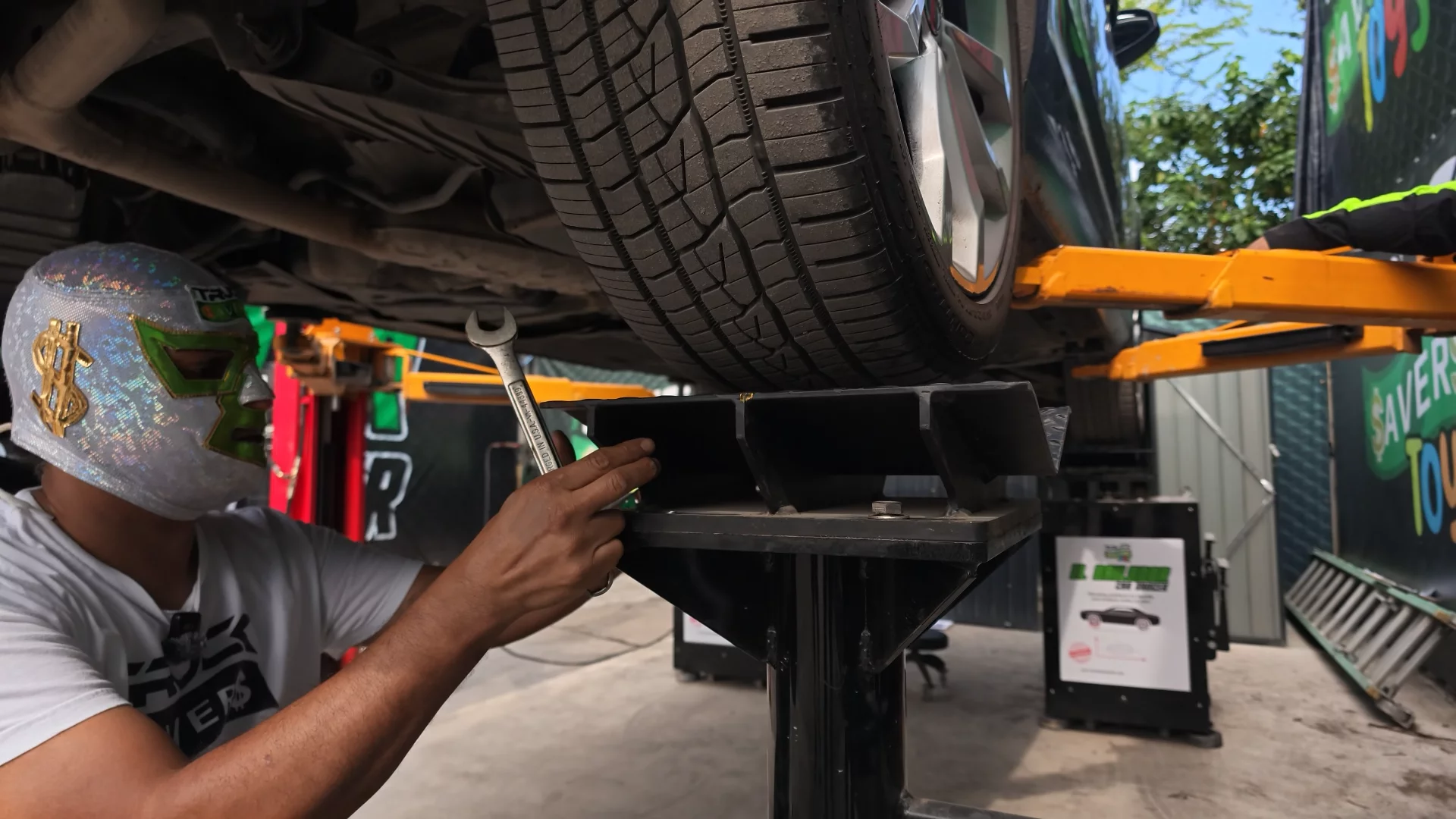
What changes when the vehicle is lifted?
When a lift supports a vehicle by its body, the wheels and suspension can hang differently from their position on the road. Forces through joints and bushings, suspension angles, and the way nearby parts contact one another may change. A noise that depends on a particular load or movement may become quieter or disappear.
A drive-on rack supports the vehicle differently from a two-post lift. The right inspection state depends on the vehicle and component. A ball-joint check, for example, must follow the specified support and measurement procedure. “Check it under load” is not a universal replacement for the service information.
Start with a description you can reproduce
Before choosing a test, document when the customer hears the sound. Ask about speed, road surface, braking, steering, temperature, recent work, and whether passengers or cargo change it. A recording may help establish which sound the customer means, but a recording alone cannot identify its source.
- Describe the complaint in the customer’s words.
- Inspect the vehicle and follow the applicable service procedure.
- Compare what happens under the conditions associated with the complaint.
- Confirm the suspected component before proposing a repair.
Where a Car Dancer fits
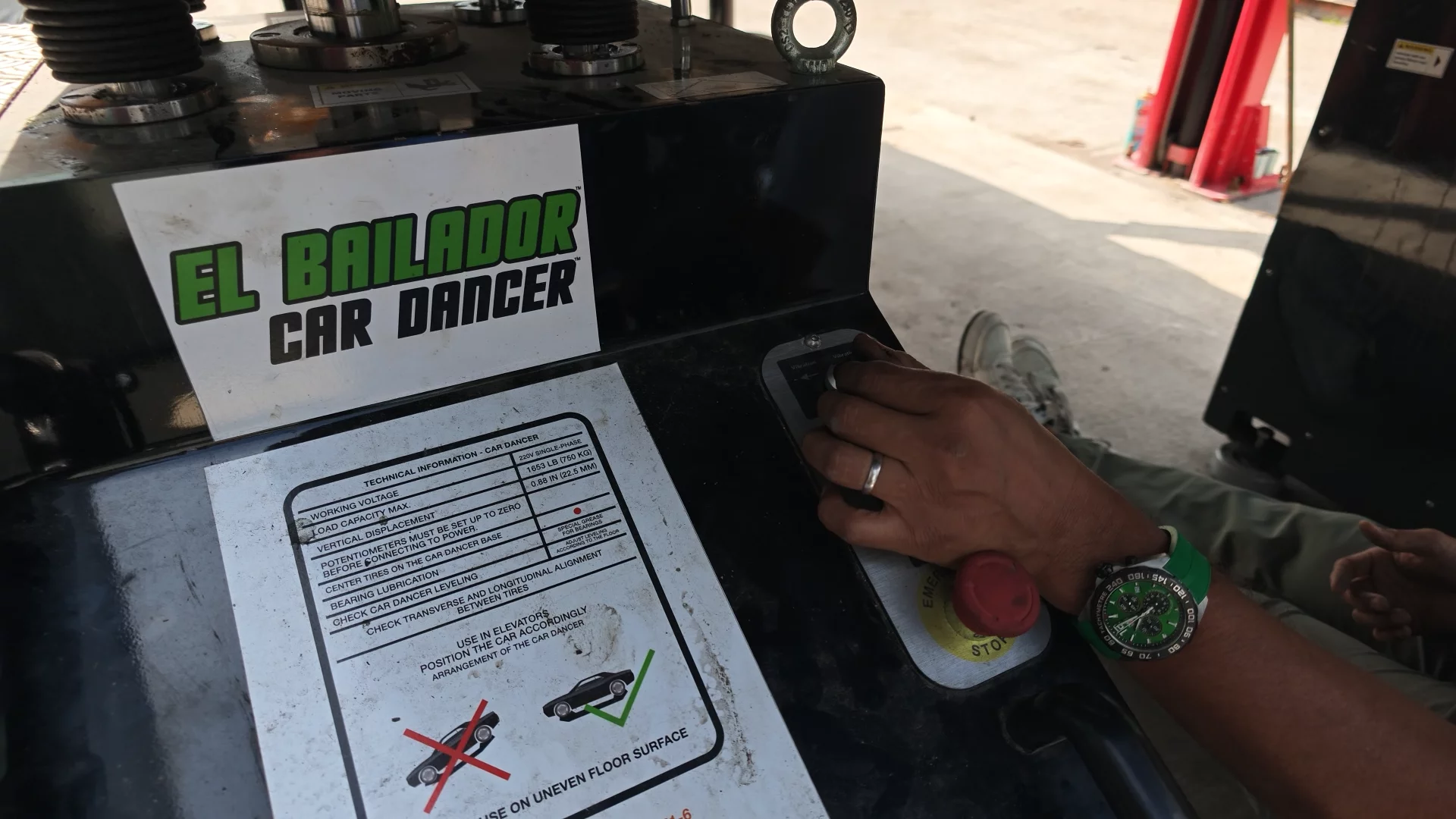
El Bailador™—our Car Dancer automotive road simulator—introduces controlled movement during a workshop demonstration so a technician can observe how the supported vehicle responds. It provides another way to investigate a suspension-noise complaint when an ordinary stationary check does not reproduce it.
Some buyers describe this type of equipment as a car shaker, suspension shaker, or suspension noise diagnostic machine. Those names describe an inspection approach; they do not mean every platform has the same movement, capacity, or installation requirements. Ask for a demonstration on a suitable car, SUV, or pickup and review the actual setup.
A quiet test still tells you something
If the sound does not occur, record that result and the test conditions. Do not label a component good or bad solely because the noise disappeared on the lift. A technician may need a different inspection state, measurements, a safe road test, or another diagnostic tool.
When a movement or sound is reproduced, document where it occurs and how it relates to the complaint. Visible motion is not automatically excessive play. The finding still needs to be evaluated against the relevant procedure before the repair is explained to the customer.
Bring the difficult question to the demonstration
For a shop considering suspension diagnostic equipment, a useful demonstration starts with a diagnostic question. What can the technician observe? What remains to be checked? How would the finding be documented? Seeing that workflow is more valuable than watching a car move without knowing why.
Further reading
Continue exploring
Inspection methods
Static vs. Dynamic Suspension Inspection: What Can Each Test Reveal?
Compare stationary checks with suspension inspection in motion. See where a Car Dancer road simulator fits in a technician’s diagnostic workflow.
Read the guide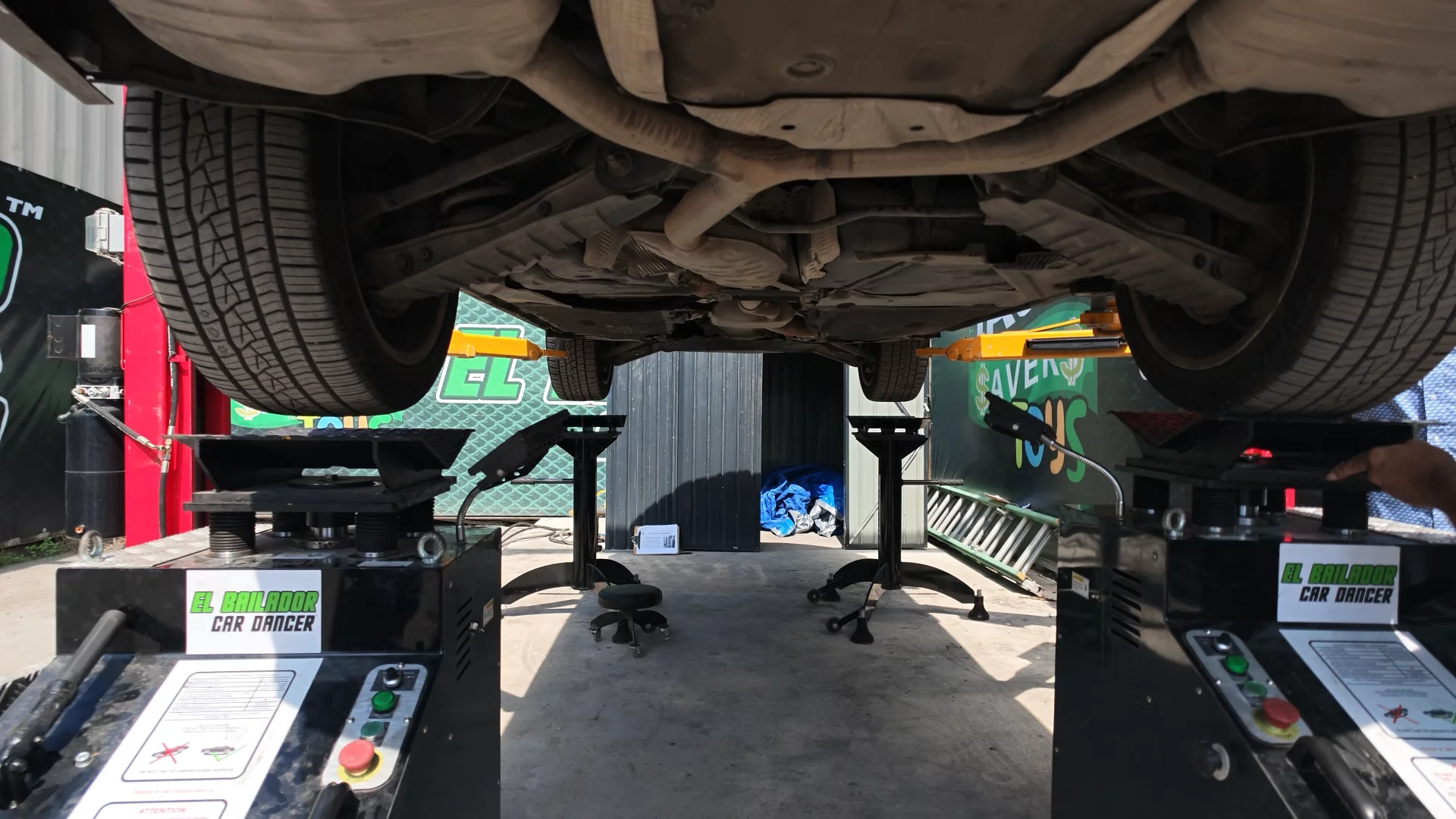
Equipping your shop
What to Check Before Buying Suspension Diagnostic Equipment
Compare vehicle compatibility, bay requirements, training, support, and the diagnostic workflow before choosing a Car Dancer or automotive road simulator.
Read the guide